
Naturist Travel with Kids
A Family Holiday First
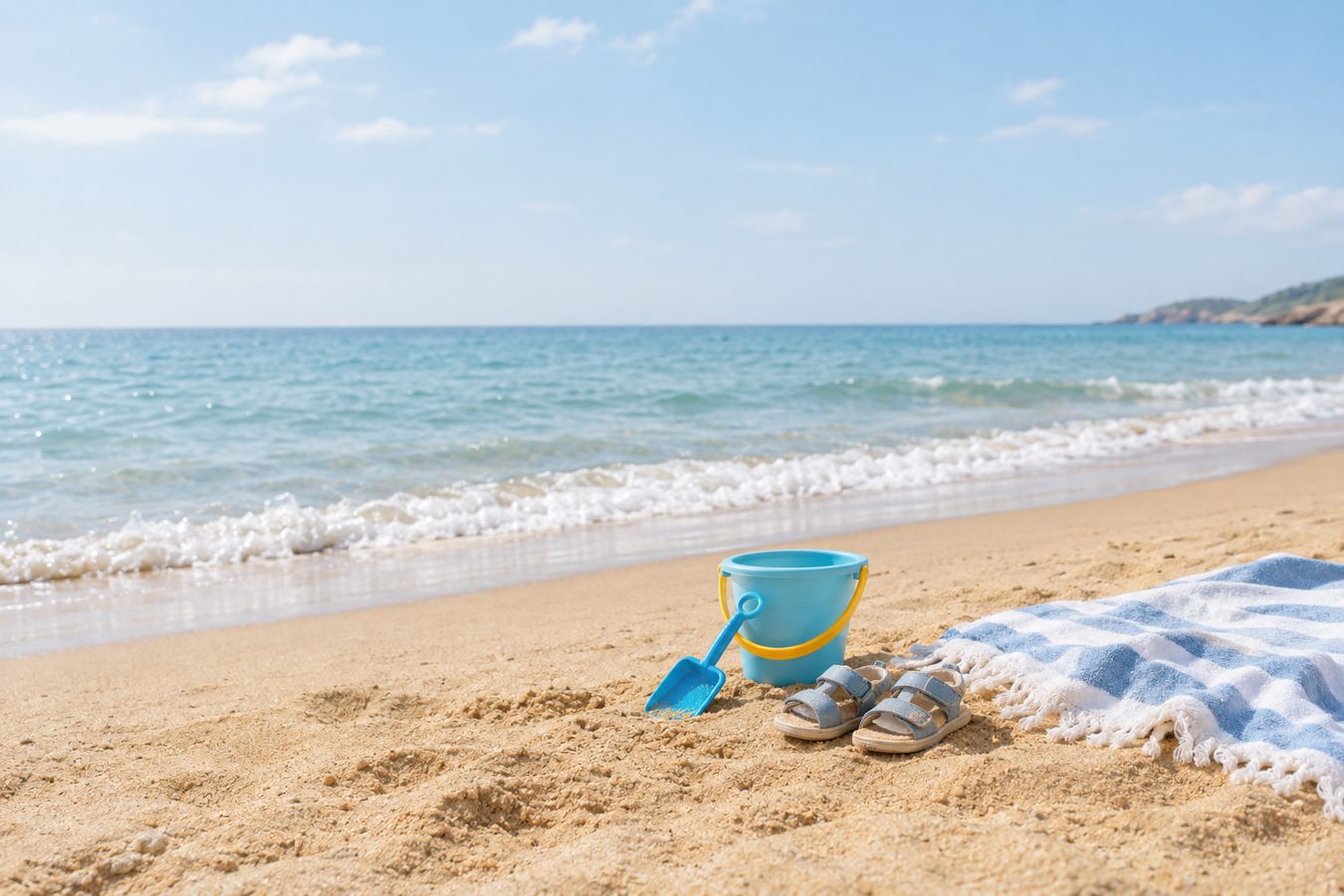
If you're reading this, you're probably wondering whether a naturist holiday could work for your family, and how to make it a good experience for everyone. Here's the reassuring part: for many families, it's simply a holiday. Swimming, sandcastles, games, ice cream and early nights, just with fewer wet swimsuits to hang up afterward.
It still takes some thought. Where should you go? How do you explain it? What if your teenager isn't interested? Let's walk through it together, one question at a time.
1 · What family naturism is (and what it isn't)
Naturism is spending time without clothes in a relaxed, respectful, nonsexual setting, usually outdoors and always in places where it's allowed. Family naturism is the same idea, in places built for all ages, with clear rules that look after children.
That's different from a "clothing-optional" beach or resort, which may be adults-only. And it's a world away from anything described as "lifestyle," which means something else entirely and is never a place for children. (Field Guide No. 2 and No. 6 explain the difference.)
Kids tend to understand the idea faster than adults expect. They already know that different places have different rules: shoes off at a friend's house, quiet in the library, swimsuits at the town pool. At a naturist park, the rule is simply that people swim and play without clothes. At school or the grocery store, clothes are expected. Context matters, and children pick that up quickly.
The message Nudity itself isn't something to be ashamed of, and it doesn't remove the need for privacy or personal boundaries.
2 · What kids can get out of it
Parents who've tried family naturism often say their kids are the most relaxed people at the pool. Here's what families tend to value most.
Seeing what real bodies look like. Children grow up surrounded by filtered photos and messages about how bodies are "supposed" to look. At a family naturist park, they see ordinary people of every age, shape and size, with scars, freckles, tummies and wrinkles, all getting on with their day. Nobody comments and nobody compares.
The message Bodies are not all the same, and that's perfectly normal. Every body deserves respect.
A calmer relationship with nudity. When nudity is just part of the setting, it stops being something to giggle about or hide. It becomes ordinary, and children can still learn that privacy and boundaries matter.
Time outdoors. Naturist holidays usually mean swimming, walking, camping, beaches and long days outside. Kids spend their days exploring, splashing and running around, then wind down to a slower pace without screens and busy schedules.
The message Naturism can be about more than being clothes-free. It's also about slowing down, enjoying the outdoors and sharing experiences.
Shared memories and a sense of belonging. Many family-friendly parks run games, nature walks, kids' clubs and evening events. Kids make holiday friends, and parents meet other families who understand.
The message A naturist holiday can be a family holiday first and foremost, full of the same laughter, adventures and discoveries as any other.
What does the research say? Honestly, not much research has been done, but what exists is reassuring. One long-running study in the U.S. followed children from early childhood into their late teens. The researchers expected to find harm from seeing parents nude at home. They didn't, and what small differences they did find were mostly positive. A more recent British study found that adults who remembered more family nudity growing up tended to feel better about their bodies.
A fair word of caution These are possible benefits, not promises. Body confidence, consent and healthy boundaries are learned through parenting and everyday experience. Naturism can give you good chances to reinforce them, but it isn't a substitute for that work.
3 · Getting ready for your first family trip
Start the conversation early. The French Naturist Federation suggests a simple approach: explain what naturism is, share why you enjoy it, describe what your kids will see so nothing feels like a surprise, and answer their questions honestly. You don't need a big speech. A few relaxed chats over a couple of weeks work better than one serious talk.
Let their questions lead. Kids will ask what they want to know, when they're ready. "Will other kids be there?" "Do I have to?" "What if someone looks at me?" Answer simply and calmly, without making it a bigger deal than it is.
Choose a place everyone is comfortable with. If you're not sure how your family will feel, a day visit or a weekend at a nearby park is a gentle first step before a longer trip.
Pack a little extra. Add these to the Packing Card in Field Guide No. 8:
- A towel for each childPlus spares. Everyone sits on their own towel.
- Kids' mineral SPF 50And plenty of it.
- Sun hats
- Rash guards or swim diapersFor little ones.
- Water shoesFor hot sand, rocks and pool decks.
- Beach toys, snacks and refillable bottles
- A cover-up for each childFor cooler evenings, or just because they'd like one.
- Guardianship or custody papersIf needed.
- The resort's family rulesSaved on your phone.
"Private, not secret." Some families explain that naturism is a family choice, a bit like religion or politics, that kids don't need to talk about at school. That's different from a secret they have to keep. Children should always know they can tell a trusted adult anything.
4 · Finding a place that's truly family-friendly
Not every naturist venue welcomes children, and not every one that does is set up for them. Here's what to look for.
- The "Family" badge on our map. We add it when a venue welcomes all ages. Policies change, so when in doubt, check it out.
- Naturist, not just "clothing-optional." Family naturist parks and villages are built around nonsexual, all-ages recreation. Skip anything described as "lifestyle" or adults-only.
- Kids' and teen clubs. Many naturist campsites, especially in France, run kids' and teen clubs in July and August, often grouped by age. They're a great way for children to make friends.
- A safeguarding policy. Well-run clubs and parks have one and will happily share it. British Naturism developed its child protection policy with guidance from the NSPCC, the UK's leading children's charity.
- Clear supervision rules. Look for rules that children stay with a parent or guardian, and that adults don't approach children they don't know. These are signs of a place that takes families seriously.
- What other families say. Read traveler stories, ask questions in naturist family groups, and don't be shy about calling the venue. Our Share your travel experience page is a good place to start.
- Prices for kids. Some parks let young children in free or at a discount.
Family-friendly examples from our directory: Cypress Cove (Florida), Euronat (France), Costa Natura (Spain, with kids' entertainment in peak season), Lake Como Family Nudist Resort (Florida), White Tail Resort (Virginia) and Glen Eden Sun Club (California). Find more on the Skyclad Travel map, and always confirm current age policies before you book.
5 · Consent, safety and boundaries
This is the most important part of the guide.
The message Being comfortable with nudity never means giving up your right to choose.
Your child always gets to choose. Children should never be pressured to undress or join in, not by staff, not by other guests and not by family. If your child wants to keep a swimsuit or T-shirt on, that's completely fine. Many kids go back and forth, and that's fine too.
Privacy is always allowed. Being at a naturist park doesn't mean giving up privacy. Kids can ask to change alone, close the bathroom door, or have some quiet time in the room.
Their body belongs to them. Children can say no to any touch they don't want, from anyone. Make sure they know they can tell you right away if anything makes them uncomfortable, and that they'll never be in trouble for speaking up.
Never photograph other people's children without their permission. Keep phones put away in shared areas, and teach kids never to photograph anyone else without asking first.
Stay close. At family parks, you're responsible for your children at all times, especially near pools, lakes and the sea. Children should always be with a parent or guardian. If you see a child alone or in trouble, find a staff member.
Tell the resort who's coming. If you're bringing children, let the resort know ahead of time and explain your relationship, including shared parenting or custody. Some resorts also have evening curfews for children in certain areas.
Sun and water. Kids' skin burns fast, and more of it is showing. Use mineral SPF 50, reapply often, and plan shade, water and snack breaks (Field Guide No. 7 has more). Hats and rash guards are welcome, and infants and toddlers who need swim diapers are usually exempt from no-swimwear pool rules.
If something feels wrong. Trust your instincts. Report any concern to staff or management straight away, and don't hesitate to leave if a place doesn't feel right.
Co-parenting? Family naturism can come up in custody situations. If you share custody, talk it over with the other parent first and, if needed, get legal advice. It's wise to have any agreement in writing.
6 · Making naturism work at every age
Comfort and privacy needs change as children grow. What works at four may not work at fourteen, and that's normal.
Toddlers and little ones. Young children usually take their cue from the people around them and rarely find nudity unusual. Keep explanations short: "At this place, people swim and play without clothes." Most parks are relaxed about the youngest children, and sun protection, naps and snacks will matter far more than anything else.
School-age kids. This is when the questions start, and that's a good thing. Answer honestly and at their level. It's a natural time to talk about privacy, consent and why different places have different rules.
Tweens and teens. Teenagers are the most likely to feel self-conscious, and their wishes deserve real respect. Listen to their worries and look for solutions together. You may find you once had the very same fears. Some places let teens wear a sarong or towel in shared areas, and French federation campsites usually require nudity only at the pool and beach. Teen clubs and youth naturist groups can help them see that naturism and a social life can go together. Some teens step back for a few years and return later. Some don't. Either way, it's their choice.
The message Honest, calm conversations help children develop understanding and confidence.
Family naturist quick card screenshot this
- Choose places with a "Family" badge, never lifestyle or adults-only
- Look for kids' clubs, supervision rules and a safeguarding policy
- Talk early and calmly, and let your kids' questions lead
- Your child always gets to choose, and privacy is always allowed
- Never photograph other people's children without their permission
- Stay close, especially near water, and use plenty of sunscreen
- Tell the resort who's coming, including custody details
This article is general information, not legal, medical or parenting advice. Always follow each venue's family policies and local laws. Skyclad Travel never publishes nude images, including nude photos of children taken at naturist venues.