
Naturist Beach Basics
Official vs. Tolerated Beaches and How to Find Them
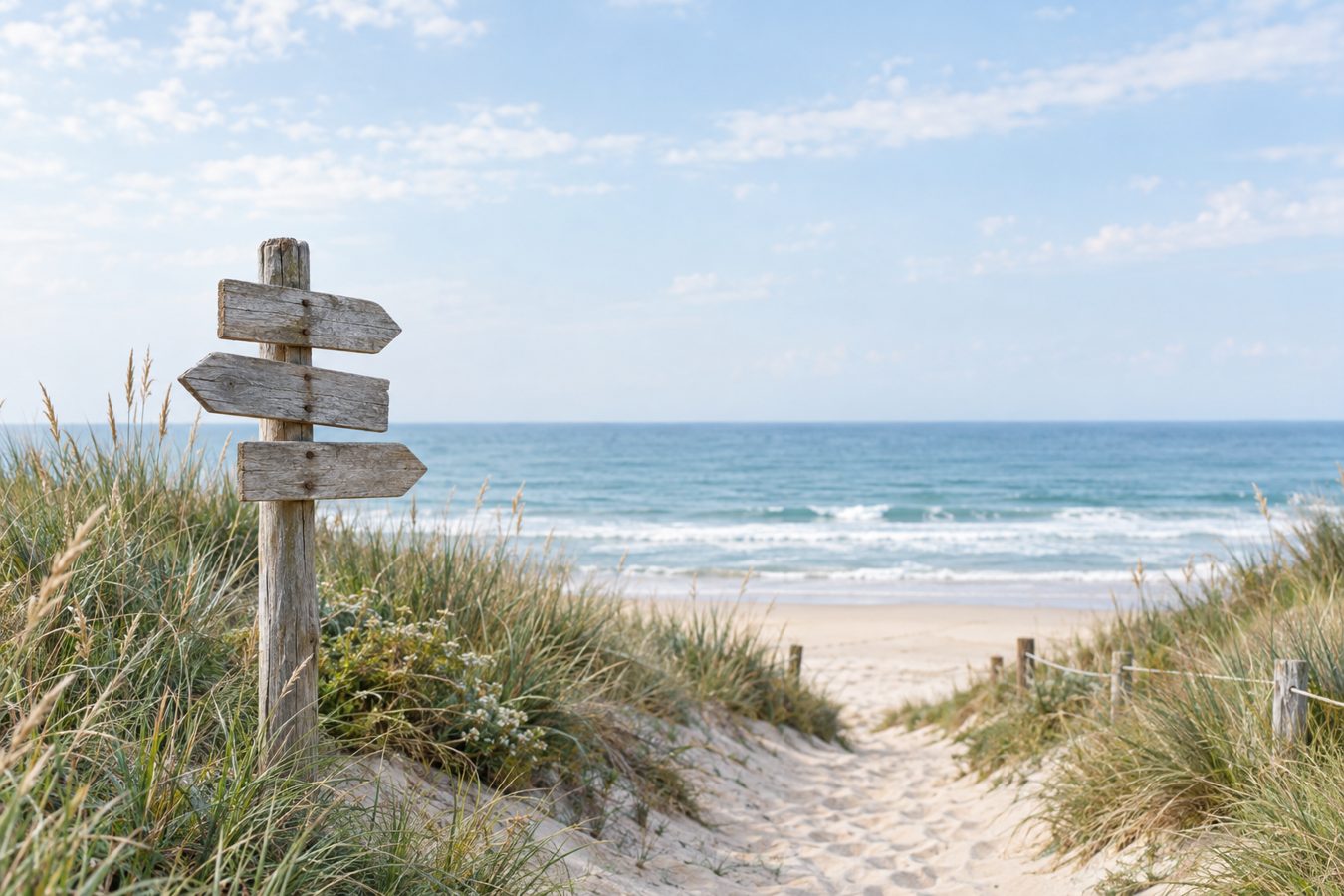
For many people, a nude beach is their very first taste of naturism. It's free, there's no membership, and you can leave whenever you like. But beaches are public places, and the rules change from one country, county or even stretch of sand to the next. This guide covers what you need to know before you lay down your towel.
Official, tolerated or illegal? The three kinds of nude beaches
Nude beaches can be official (legally sanctioned), unofficial (tolerated by locals and police) or illegal.
| Type | What it means | What it usually looks like |
|---|---|---|
| Official | Formally designated by the authorities, with marked boundaries | A signed stretch of a public beach, set aside by a county, city or park authority, often with lifeguards and posted rules |
| Allowed, not designated | Not officially "clothing-optional," but no rule against it | Often on park or federal land, where the managers say nudity isn't prohibited even though the area isn't designated for it |
| Tolerated | Technically against the law, but rarely enforced | A beach where nudity has gone on for decades by custom. You probably won't be ticketed, but enforcement can change at any time |
Why it matters At an official beach, you're protected by the rules. At a tolerated beach, enforcement can change, so be extra discreet, stay well within the usual area, and dress before leaving it. Skyclad Travel labels every beach as an official nude beach, a nude section of a larger beach or traditional (tolerated), so you know before you go.
The rules differ by country
United States. There's no federal nudity law. Whether you can undress depends on state law, county or city rules, and whoever manages the land. Most states prohibit public nudity, and no California beaches are officially designated, though several have become clothing-optional through decades of use.
Spain. Spanish law doesn't prohibit nudity on any beach. The Spanish Naturist Federation's president has said it's "perfectly legal" to go without a swimsuit on any of the country's 3,000-plus beaches. Local custom still matters, so dedicated naturist beaches are the most comfortable choice.
Germany. Look for FKK, short for Freikörperkultur, or "free body culture". You'll find many FKK areas on beaches, as well as nude spas and even parks.
Croatia. Public nudity is technically illegal, but it's permitted and accepted on designated FKK beaches and long-established naturist sections. Look for FKK signs on roads, beach maps and tourist information.
Brazil. Rules can be strict. At some official beaches, local law bars men who arrive without a woman unless they hold an INF card, and full nudity is the norm.
Field Guide tip Before any trip abroad, check the "Local Laws and Customs" section for your destination on the U.S. State Department's travel site.
How to find naturist beaches
- Start with the Skyclad Travel map. Beaches are the blue pins, each labeled with its beach type and its country's Courtesy Rating.
- Check official sources. County, city and park websites confirm exact boundaries.
- Ask a naturist federation. AANR, the INF and national groups keep directories and local knowledge.
- Look for signs: "clothing optional," "FKK," "naturiste" or "nudista." In Croatia, FKK signs mark the way.
- Read recent reviews for current conditions, crowd mix and any enforcement changes.
What to bring
- Sunscreen, and lots of itBring reef-safe SPF 50, and more than you think you need.
- A big towelSit on it. It's a hygiene standard and a social expectation at every clothing-optional beach.
- Water, food and shadeMany nude beaches have no shade, shops or fresh water on the sand.
- An easy cover-upFlip-flops and a simple dress or shorts for the walk there.
- A waterproof dry bagFor your phone, keys and wallet. There are usually no lockers.
- Sturdy shoesSome beaches are reached by a steep or rocky trail.
- A trash bagCarry out more than you brought in.
- Cans or plastic bottlesMany beaches ban glass.
Sun safety for skin that rarely sees the sun
Skin that's usually covered burns faster and worse than your forearms.
- Use broad-spectrum SPF 30 or higher, and SPF 50 for your first few outings.
- Apply 15–20 minutes before undressing, and reapply every two hours and after every swim.
- Don't miss the usually covered spots: buttocks, inner thighs, chest, tops of the feet and genitals.
- Choose a gentle mineral sunscreen (zinc oxide or titanium dioxide). It's kinder to sensitive skin and meets reef-safe rules in places like Hawaii.
- Feel a burn starting? Cover up with your towel or sarong right away.
- Watch for chafing. Sand and salt add friction, and an anti-chafe balm helps.
Water and site safety
- Know the water. Many ocean swimming spots have strong rip currents, and you often can't see them from the beach. Watch for warning signs and flags, and obey lifeguards. An emergency room visit is not typically the way anyone wants to spend their day.
- Never turn your back on the ocean. Rogue waves can appear at any time.
- Never swim alone, especially somewhere new.
- Stay away from structures like piers, jetties and rocks in the water.
- Respect sea life. You're a visitor in its home.
- Check lifeguards, hours and closures. Many nude beaches have no lifeguards, and some close at sunset or for wildlife nesting.
Beach etiquette refresher
Everything from Field Guide No. 1, plus a few beach specifics:
- Stay inside the boundaries, and dress before walking into parking lots, textile beaches or anywhere outside the clothing-optional area.
- Give people space. Don't set up right beside someone when there's room.
- Walk along the shoreline to avoid kicking sand, and keep music low.
- No photos of other people. Keep phones put away.
- No sexual behavior. It can lead to arrest, and at tolerated beaches it puts everyone's access at risk.
- Protect the place. Respect dunes and wildlife, and leave nothing but footprints.
Going solo? Set up near a family or a regular who can offer advice or company. See Field Guide No. 4 for more.
Beach Basics Quick Card screenshot this
- Official, allowed or tolerated? Know before you go
- Find the exact boundaries, and stay inside them
- SPF 50, reapply often, mineral is best
- Towel, water, shade, dry bag, cover-up
- Check lifeguards, currents and closing times
- No photos, no glass, no trace
- Dress before you leave the clothing-optional area
Laws and enforcement change. This article is general information, not legal advice. Always follow posted signs, local laws and lifeguard instructions. Skyclad Travel never publishes nude images.